
 In the second annual installment of Seyfarth Shaw’s Commercial Litigation Outlook, our nationally-recognized team provides keen insights about what to expect in 2022. It will be a busy year that will call upon clients and their counsel to be flexible, creative, and proactive on many fronts.
As the pandemic morphs into an endemic, we are seeing overall litigation activity increase as court backlogs have cleared and trials have resumed. The drivers of increased litigation are many, and include vaccine availability, a more robust federal enforcement scheme, and impending court deadlines in cases that were either filed during the early stages of the pandemic or which had previously stalled due to restricted travel, inactivity, or court closures.
Join us for a two-part webinar series, where our subject matter experts will discuss a range of topics, including how the reliance on all things online, and remote workforces, has amplified the risks around cyberattacks and privacy and insurance premiums are increasing across the board for all lines of insurance, particularly as insurers adjust their risk to the increase in expensive ransomware attacks. Other key trends in the commercial litigation space addressed in these webinars are:
- Antitrust
- Bankruptcy
- Consumer Class Action Defense
- Consumer Financial Services Litigation
- eDiscovery Litigation
- Fair Credit Reporting Act
- Franchise and Distribution
- Health Care Litigation
- International Dispute Resolution
- Real Estate Litigation
- Securities
- Trial Outlook
Part 1: Commercial Litigation Outlook: Insights and Predictions for Litigation Trends in 2022
Tuesday, April 12, 2022
1:00 p.m. to 2:00 p.m. Eastern
12:00 p.m. to 1:00 p.m. Central
11:00 a.m. to 12:00 p.m. Mountain
10:00 a.m. to 11:00 a.m. Pacific
In the first session of the series, we will provide insight on increased cyberattacks and how to avoid certain risks, as well as significant trends, predictions and recommendations in the following areas:
- Bankruptcy
- eDiscovery Litigation
- Fair Credit Reporting Act
- Franchise and Distribution
- Privacy
- Securities
Speakers
Scott Carlson, Partner, Seyfarth Shaw
Jay Carle, Partner, Seyfarth Shaw
William Hanlon, Partner, Seyfarth Shaw
Esther Slater McDonald, Partner, Seyfarth Shaw
Jason Priebe, Partner, Seyfarth Shaw
Catherine Schumacher, Partner, Seyfarth Shaw
John Skelton, Partner, Seyfarth Shaw
Moderator
Rebecca Woods, Partner, Seyfarth Shaw
Part 2: Commercial Litigation Outlook: Insights and Predictions for Litigation Trends in 2022
Wednesday, April 27, 2022
1:00 p.m. to 2:00 p.m. Eastern
12:00 p.m. to 1:00 p.m. Central
11:00 a.m. to 12:00 p.m. Mountain
10:00 a.m. to 11:00 a.m. Pacific
In the second session of the series, we will dive into the world of Insurance and how the focus is turning to increased protection for potential cyber and data breach incidents, as well as key trends in the following areas:
- Trial Outlook
- Antitrust
- Consumer Class Action Defense
- Consumer Financial Services Litigation
- Health Care Litigation
- International Dispute Resolution
- Real Estate Litigation
Speakers
Talat Ansari, Partner, Seyfarth Shaw
Kristine Argentine, Partner, Seyfarth Shaw
David Bizar, Partner, Seyfarth Shaw
Jonathan Braunstein, Partner, Seyfarth Shaw
Tom Locke, Partner, Seyfarth Shaw
Christopher Robertson, Partner, Seyfarth Shaw
Caleb Schillinger, Partner, Seyfarth Shaw
Elizabeth Schrero, Partner, Seyfarth Shaw
Moderator
Shawn Wood, Partner, Seyfarth Shaw
 It is well established that the Georgia Trade Secret Act (“GTSA”) includes a preemption clause holding that the Act “supersede[s] conflicting tort, restitutionary, and other laws of this state providing civil remedies for misappropriation of a trade secret.” O.C.G.A. § 10-1-767(a). The GTSA does not, however, preempt (1) “[c]ontractual duties or remedies, whether or not based upon misappropriation of a trade secret”; (2) “[o]ther civil remedies that are not based upon misappropriation of a trade secret”; or (3) “[t]he definition of a trade secret contained in [another Georgia statute].” O.C.G.A. § 10-1-767(b). In other words, the GTSA preempts any non-contractual claims that allege the misappropriation of a trade secret. See Bd. of Regents of the Univ. Sys. Of Georgia v. One Sixty Over Ninety, LLC, 830 S.E.2d 503, 510 n.13 (Ga. Ct. App. 2019) (“[T]he Trade Secrets Act superseded the common law tort of misappropriation [of trade secrets].”)
  Seyfarth partner Jesse Coleman and associate Kevin Green authored an IP Litigator article focused on a recent DTSA/TUTSA lawsuit which involved the public disclosure of alleged trade secret in an expired patent. Read the full article from the March / April 2022 edition of IP Litigator
  Robert Milligan, Seyfarth partner and co-chair of the firm’s Trade Secrets, Computer Fraud & Non-Competes group, will moderate the “Leveraging Internal Assets in the Governance and Management of Trade Secrets” panel for The 2022 Sedona Conference. Seyfarth is also sponsoring the Sedona Conference, which is taking place May 9–10 at The Brown Palace Hotel & Spa in Denver, Colorado.
 On March 24, 2022, Washington state Governor Inslee signed into law Engrossed Substitute House Bill 1795 (The Silenced No More Act) (“ESHB 1795”). Washington now becomes the second state (after California) to render nondisclosure and nondisparagement provisions illegal in employment agreements.
  Louisiana is not a fan of non-competes. Any employer who has employees in Louisiana is likely aware of that (or should be). Louisiana statutory code says so; case law says so; and now the Fifth Circuit has chimed in to add a little more food for thought on the subject.
 As is often true in fashion, what once was old is now new again. But for famed wedding dress designer, Hayley Paige Gutman, she certainly is ruing the Second Circuit’s recent decision to revive its 1999 holding of Ticor Title Ins. Co. v. Cohen, 173 F.3d 63 (2d Cir. 1999). In JLM Couture, Inc. v. Gutman, 24 F.4th 785 (2d Cir. 2022), the Second Circuit held that JLM Couture’s non-compete was enforceable through New York’s oft-overlooked “uniqueness” exception. But the real question to me as a litigator is whether this doctrine should become part of the tool bag going forward. Upon analysis, the answer is somewhat mixed and going to be exceedingly fact dependent.
  On February 22, 2022, the Minnesota legislature came one step closer to banning non-compete clauses under certain circumstances. On that date, the Minnesota House Labor, Industry, Veterans and Military Affairs Finance and Policy Committee
 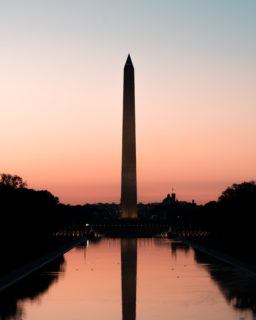 The ongoing saga of DC’s controversial Ban on Non-Compete Agreements Amendment Act of 2020 (the “Act”) logged another chapter last week when the DC Council passed a further amendment delaying the effective date of the Act from April 1, 2022, until October 1, 2022. The Act, which was originally passed in December 2020, would prohibit employers from utilizing non-compete agreements, a statutory ban which has been adopted in certain other states, but would also prohibit employers from utilizing anti-moonlighting provisions or other “duty of loyalty” policies for DC employees. This latter prohibition would be a first-of-its-kind ban, and would prohibit employer policies which are generally viewed as both reasonable and non-controversial, even in states that have taken a negative view toward post-employment restrictive covenants.