
As we discussed on the blog not too long ago, a significant new bill was recently introduced in Congress seeking to add a federal civil cause of action for trade secret theft. In a bipartisan effort, Senators Christopher Coons (D-Del) and Orrin Hatch (R-Utah), both members of the Senate Judiciary Committee, introduced the bill in late April 2014. On May 12, Robert Milligan spoke with LexBlog’s Colin O’Keefe in a live online interview to discuss the bill and what it may mean for companies if Congress passes it.
Seyfarth Attorneys Lead Discussion of Proposed EU Trade Secrets Directive at ITech Law World Technology Conference
 This week, at the ITech Law World Technology Conference in New York, Seyfarth attorney Dan Hart briefed members of the International Technology Law Association’s Intellectual Property Committee about the European Commission’s proposed Directive on trade secret protection. As we have written, the new Directive, if enacted, will substantially alter the legal landscape in Europe regarding trade secret protection and will enhance cross-border certainty within the EU. Dan’s presentation generated lively discussion among lawyers from a wide variety of jurisdictions regarding the similarities and dissimilarities between European and US trade secret law and similar attempts in the US to federalize trade secret protection.
The ITech Law World Technology Conference concludes today. If you are attending the ITech Law World Technology Conference, please be sure stop by our table in the Vanderbilt Room of the Waldorf-Astoria Hotel.
Bob Stevens Reflecting On Georgia’s Non-Compete Law at its Third Anniversary
Georgia’s restrictive covenant statute turns three years old this week and Seyfarth Shaw partner Bob Stevens offers insight into the significant changes in the law and how Courts are interpreting those changes. The legal changes are not only significant but anecdotal evidence from trial courts reflects that at least some trial courts view the change in law as an almost bright line regarding whether employment related restrictive covenants are enforceable in Georgia. Please also see some of our previous coverage on this important change in Georgia law.
Upcoming Client Webinar: Bring Your Own Device Policies
 On Thursday, June 19, 2014 at 12:00 p.m. Central, Laura Maechtlen and Michele Haydel Gehrke will present the webinar Bring Your Own Device Policies. As employees have widely adopted personal mobile devices such as smartphones and tablets, there has been a parallel trend of employers allowing (or requiring) their employees to use their own personal mobile devices at work. This “Bring Your Own Device,” or “BYOD” movement, can provide benefits to employees and employers such as convenience, greater flexibility and productivity, as well as cost savings. However, BYOD programs can also create risks for employers. In this webinar, we hope to cover some topics to consider when adopting a BYOD policy. We also provide some recommendations to help mitigate these risks.
The topics being presented during this webinar include:
- Wage and Hour Issues
- Off-the-Clock Work
- Reimbursement of Employee Expenses
- Data Security Issues
- BYOD Policies in a Unionized Workforce
- Intellectual Property Issues
- Implementation/Training/Compliance
- Employee Privacy Concerns
- Additional Concerns

There is no cost to attend this program, however, registration is required.
If you have any questions, please contact events@seyfarth.com.
*CLE: CLE Credit for this webinar has been awarded in the following states: CA, IL and NY. CLE Credit is pending for the following states: GA, NJ, TX and VA. Please note that in order to receive full credit for attending this webinar, the registrant must be present for the entire session.
Webinar Recap! Employee Social Networking: Protecting Your Trade Secrets In Social Media
By Scott Schaefers, Justin Beyer and Joshua Salinas
We are pleased to let you know that the webinar “Employee Social Networking: Protecting Your Trade Secrets in Social Media” is now available as a podcast and webinar recording.
In Seyfarth’s second installment of its 2014 Trade Secrets Webinar series, Seyfarth attorneys addressed the relationship between trade secrets and social media.
As a conclusion to this well-received webinar, we compiled a list of key takeaway points, which are listed below.
- The Law is on the Rise. 14 states now have laws on the books prohibiting employers from requiring or even asking for access to employees’ or job applicants’ personal social media accounts. Penalties for violations range from nominal administrative fines to much heavier court-imposed judgments, including punitive damages and attorneys’ fees. Many of the laws, however, have broad exceptions and loopholes, including required employer access of “nonpersonal” accounts and on suspected data theft or workplace misconduct, or for bona fide employer network and device monitoring. To learn more, ask us for a free copy of our newly published desktop reference, or give us a call.
- Watch Out for Your Trade Secrets. The new legislation may throw wrenches into employer-employee trade secret theft cases. For example, a disloyal employee copies a confidential employer customer list onto his personal LinkedIn account, thus effectively publishing that list. The employee works in a privacy state, which has an exemption for suspected data theft. The employer hears unsubstantiated gossip about that list copying, but does not investigate based on the flimsy evidence and for fear of violating the privacy law. The employee later resigns, and uses that list for a competitor. Did the former employer waive a trade secrets claim against the employee because it decided not to investigate, even though it could have? Did that decision amount to an unreasonably insufficient effort to protect its trade secrets, under the statutory definitions of trade secrets? In our new desktop reference, we address those questions, and many more.
- Have a Policy. Employers which have offices or employees working in a privacy state should seriously consider implementing a social media usage policy. That policy should describe, among other things, what constitutes a “personal” social media account, what types of information belong to the employer, what types of social media activity is permissible, the instances in which the employer may seek to require or request access, and the potential consequences for employee non-compliance. With our unique expertise, we can help.
Please join us for our next webinar on May 28th, Barbarians at the Gate: Class Action Avoidance and Mitigation for Data Breach
Not Easy Being Green: Trade Secret Holders May Be Singing the Blues Over Green Chemistry
 It isn’t easy to change the mindset of a capitalistic society. Although the science of ecology dates back more than 150 years and has its roots in ancient Greece, society as a whole has only become more environmentally aware in the last 40 some years. It remains a struggle to make people aware that, really, we are not the only organisms on the planet. So let’s start by making sure that we aren’t using any secrets, including trade secrets, to contaminate our little place in the universe.
One of the latest efforts to minimize the effects of man on the world’s diverse, delicate ecosystems is “Green Chemistry,” which encourages products and processes that reduce use and generation of hazardous substances. To further the goals of Green Chemistry, the California “Safer Consumer Product (SCP) Regulations” became law October 1, 2013.
Sounds great, doesn’t it? If a hydro-fluorocarbon (HFC) and a chlorofluorocarbon (CFC) can do the same job (e.g., the air conditioning in your car), and HFCs do not destroy the ozone layer like CFCs do, why shouldn’t the government force you to use HFCs? Unfortunately, implementing such change isn’t as easy as a mere change in an acronym letter, and there are a few additional items in the rules that make full compliance, uh, uncomfortable.
One of the rules under the SCP is that there can be no secrets from the government. That means you must disclose your trade secrets in detail to the State of California. Don’t worry, though, the government won’t tell anyone your trade secrets. And there won’t be any computer hacking or leaks either.
True, the SCP regulations have a process to protect trade secrets from public disclosure. It seems to be a “tell us your secret and hope for the best” approach, however.
If you have a trade secret that falls within the SCP regulations, you must first make a written claim to the Department of Toxic Substance Control (DTSC) that you have a trade secret. You tell the DTSC in writing exactly what your trade secret is and provide the DTSC evidence why it should remain a trade secret. The DTSC reviews your application and evidence and makes a ruling on your request.
If the DTSC decides — for whatever reason — that the information does not rise to the level of trade secret protection . . . they deny your request. If you disagree, you have to sue the State of California within 30 days of the denial to maintain the confidentiality of the information. If you don’t file, the DTSC makes your trade secret information public.
If you do file a preliminary injunction or for declaratory relief to protect your information from disclosure, you have to disclose all of your trade secret information in court, but you are allowed to request redaction of certain information. Redaction, schmedaction . . . there are no rules stating that the court must keep your information confidential.
Worse yet, at least 30 other states are considering similar regulations.
Disclosing your trade secrets may be necessary under California’s SCP and similar laws around the country. The path to keeping your trade secrets confidential while becoming more ecologically sound just became a lot more difficult.
As a famous amphibian puppet says, “It’s not easy being green.”
Big Changes May Be Ahead for the Nation’s Trade Secret Laws
 By Robert Milligan and Joshua Salinas
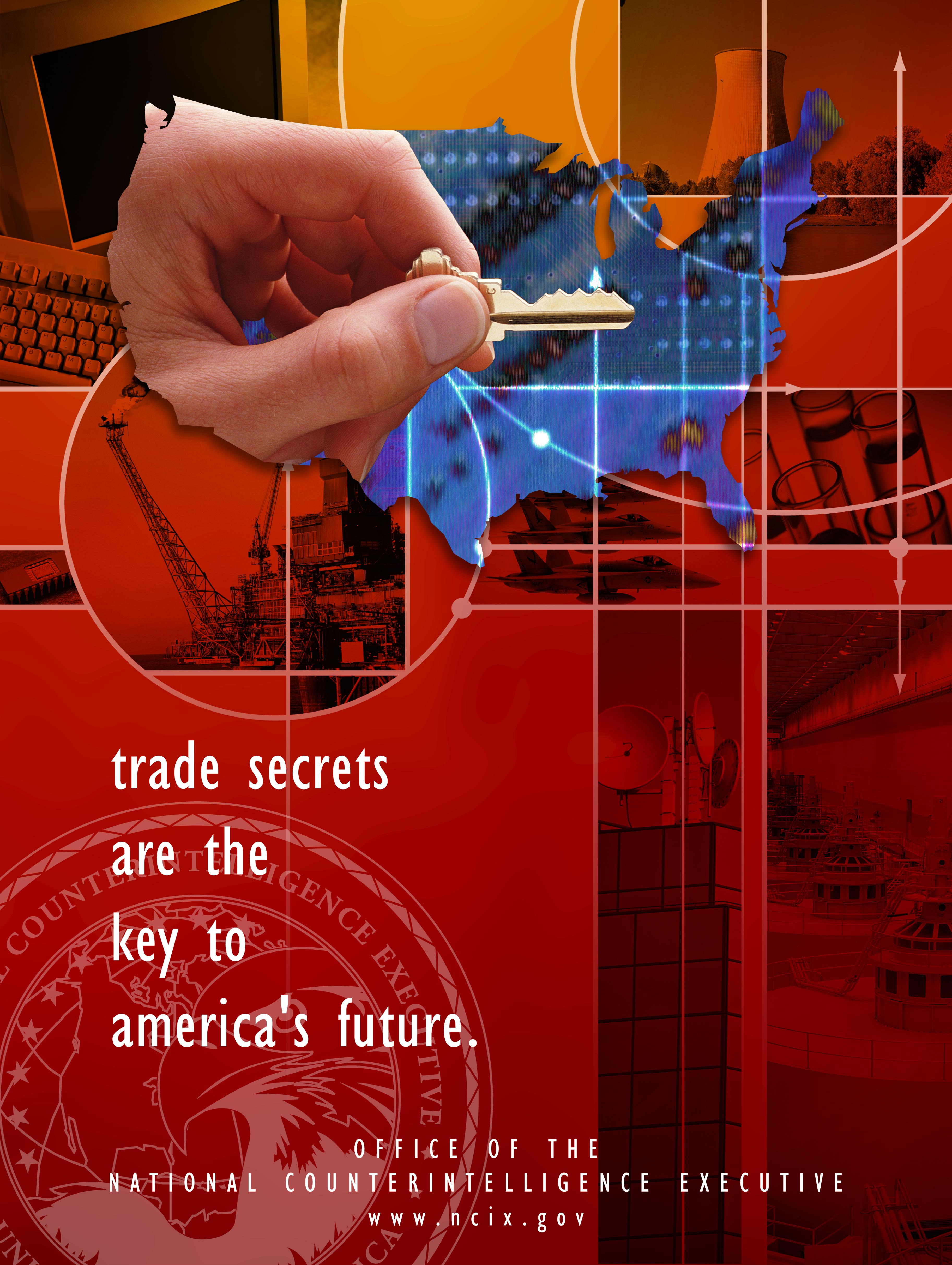
A significant new bill was recently introduced in Congress seeking to add a federal civil cause of action for trade secret theft.
On Tuesday, April 29, 2014, in a bipartisan effort, Senators Christopher Coons (D-Del) and Orrin Hatch (R-Utah), both members of the Senate Judiciary Committee, introduced the bill.
Senators Coons and Hatch’s bill, entitled the “Defend Trade Secrets Act of 2014,” authorizes a trade secret owner to bring a civil action for a violation of sections 1831(a) or 1832(a) of the Economic Espionage Act. It also permits an owner to bring an action for a “misappropriation of a trade secret that is related to a product or service used in, or intended for use in, interstate or foreign commerce.”
“The intellectual property that drives the U.S. economy has never been more valuable, or more vulnerable,” Coons said in the written statement. “This bipartisan bill will empower American companies to protect their jobs by legally confronting those who steal their trade secrets. It will finally give trade secrets the same legal protections that other forms of critical intellectual property already enjoy.”
According to the Senators’ news release, an estimated $160 to $480 billion dollars are lost to trade secret theft in the United States each year. In today’s electronic age, they observe that trade secrets can be stolen with a few keystrokes and increasingly, they are stolen at the direction of a foreign government or for the benefit of a foreign competitor. The bill seeks to combat the loss of intellectual property and jobs by providing the private sector with access to the federal courts to protect its intellectual capital.
According to the news release, the Economic Espionage Act as presently constituted is insufficient as the Department of Justice brought only 25 criminal trade secret theft cases last year. According to the Senators, the federal courts are better suited to working across state and national boundaries to facilitate discovery, effectuate service on parties, and to prevent a party from leaving the country.
Senators Coons and Hatch have also identified three main objectives that the legislation would accomplish. First, it will harmonize U.S. law by building on the Economic Espionage Act to create a uniform standard to allow companies to craft one set of non-disclosure policies on a fifty state basis. Second, it provides for injunctions and damages to protect companies whose trade secrets are stolen. Third, it is consistent with the approach taken to protecting other forms of intellectual property which are already covered by federal law.
The bill provides for ex parte orders for the preservation of evidence and seizure. Based upon an affidavit or verified complaint, the court may, should it find that the order is necessary to prevent irreparable harm, provide orders for: 1) the preservation of evidence, including the copying of electronic storage medium that contain the trade secret; 2) injunctive relief to prevent any actual or threatened trade secret violation; and 3) permit affirmative actions to be taken to protect a trade secret.
The bill authorizes the court to issue an order providing for the seizure of any property used, in any manner or port, to commit or facilitate the commission of trade secret theft, similar to the seizure procedures used to protect against trademark infringement under the Lanham Act.
The bill also provides for robust remedies, including injunctive relief, damages, unjust enrichment, a reasonable royalty in certain instances, and exemplary damages in an amount not more than three times actual damages. It also provides for attorneys’ fees if a claim of misappropriation is made in bad faith, a motion to terminate an injunction is made or opposed in bad faith, or a trade secret is willfully and maliciously misappropriated. The statute of limitations is five years after the date on which the misappropriation is discovered, or by exercise of reasonable diligence should have been discovered.
Lastly, the bill does not preempt any other provision of law.
Among the noticeable benefits for plaintiffs under the proposed legislation are: 1) access to federal court for trade secret theft; 2) seizure and preservation orders; 3) greater exemplary damages than provided under the UTSA; 3) a longer statute of limitations than provided under the UTSA; 4) no express trade secret identification requirement; and 5) arguably, no preemption of common law claims.
As currently drafted, the bill may still face some challenges in obtaining effective service of process and personal jurisdiction over foreign bad actors, as the Department of Justice has recently faced such challenges in criminal actions brought under the Economic Espionage Act.
The bill represents Senator Coons’ third attempt at introducing trade secret legislation to create a private civil cause of action after submitting similar bills in 2012 and 2011. Proponents of the legislation can only hope that the third time is a charm. The ABA Intellectual Property Section previously passed a resolution supporting the creation of a civil cause of action for trade secret theft in federal court.
Why is this recent legislation different? The Defend Trade Secrets Acts appears to have removed the “nationwide service of process” and “sworn declaration of misappropriation” provisions, which were some of the mechanisms provided in the 2012 bill to establish standing under the statute. Instead, the statutory language authorizing a private civil cause of action mirrors the language under the Economic Espionage Act, including the recent amendments under the Theft of Trade Secrets Clarification Act.
The bill has won the support of the National Association of Manufacturers, the U.S. Chamber of Commerce, BSA/ The Software Alliance, and companies including 3M, Abbott, AdvaMed, Boston Scientific, Caterpillar, Corning, DuPont, GE, Eli Lilly, Medtronic, Micron, Microsoft, Monsanto, Philips, P&G, and United Technologies.
Rep. Zoe Lofgren (D-Calif.) also introduced last year in the House of Representatives the Private Right of Action Against Theft of Trade Secrets Act, which would create a federal civil claim for trade secret theft. The bill, however, was much more limited than Senator Coons’ proposed 2011 and 2012 bills and the most recent bill.
Another bill seeking to add a federal cause of action for trade secret theft was also introduced by Sen. Jeff Flake (R-Ariz.) entitled the “ Future of American Innovation and Research Act” (FAIR), S. 1770, in November 2013.
FAIR differs from the Defend Trade Secrets Act because it does not amend the Economic Espionage Act. FAIR is also focused on combating foreign trade secret misappropriation (i.e., misappropriation occurring outside the U.S. or for the benefit of a foreign person or entity). FAIR also allows plaintiffs to obtain an ex parte seizure order, which is more restrictive than the Defend Trade Secret Act’s seizure order. It provides that any seized property will be held by a U.S. Marshall or other federal officer appointed by the court pending further hearings/objections by the defendant.
On May 13, 2014, the Senate Judiciary Subcommittee on Crime and Terrorism will have a hearing on trade secret theft entitled “Economic Espionage and Trade Secret Theft: Are Our Laws Adequate for Today’s Threats?”
We will keep you apprised of any further material developments.
Tips for Avoiding Liability for Trade Secret Misappropriation Concerning the Hiring and Departure of Employees
 By Robert Milligan and Joshua Salinas
As companies face increasing competitive and financial pressures, management is understandably consumed with running the day-to-day operations of the business and working to achieve business objectives and maximize the bottom line. As a result, it is not uncommon for companies to find themselves in situations where important assets are overlooked or taken for granted. Yet, those same assets can be lost or compromised in a moment through what is often benign neglect.
Authoritative sources estimate that companies lose hundreds of millions of dollars (if not billions) as a result of trade secret theft. At the same time, companies sometimes find themselves, through poor controls, exposed when they inadvertently obtain others’ trade secrets.
In the rush to deliver results, some companies take shortcuts in the hiring and departure process that often leave them exposed to claims for trade secret misappropriation, aiding and abetting breaches of loyalty, and intentional interference with contractual relationships or business expectancies with customers or employees.
California’s strong public policy against certain employee noncompetition agreements and post-termination restrictions on employee mobility means strong trade secret protections are essential for California employers to protect against the unlawful use or disclosure of valuable company information and related competitive issues when key employees join competitors. Accordingly, while non-competes may be void in California, prudent companies conducting business in California will ensure that their trade secret protection practices are state of the art, including their onboarding and offboarding process.
In this second video of a two-part series (see part one here), we illustrate some best practices when interviewing a competitor’s employees, as well as handling your own employees’ departures, regarding the protection of trade secrets and other confidential information in California. During the video, a prospective candidate offers to share during his employment interview his current employer’s trade secrets regarding sensitive business and customer information for the Southern California market. You will also see how the employer handles the exit interview of that employee.
When watching the video below, consider the following:
- How does the interviewer avoid the applicant’s disclosure of trade secret and other confidential information and focus the candidate on general skills and knowledge?
- How does the prospective employer condition its offer of employment?
- How does the current employer try to protect its trade secret and other confidential information with departing employees?
- What type of policies and procedures do the current employer and prospective employer put in place to better protect themselves?
Click below to discover some of the best practices illustrated in the video and in general to protect trade secrets.
 The Interviewer
- Discuss general skills and talents, not employer’s customers or trade secrets
- Tells candidate to be careful not to reveal his employer’s trade secrets or confidential information
- Controls the interview and puts the applicant at ease
- Encourages the applicant to give two weeks’ notice to assist his employer with the transition
- Asks the applicant for all copies of his previous employment agreements, and indicates that the offer is contingent on a review of those agreements
- Consider putting in a position if hired where the employee will not reveal confidential or trade secret information
- Make clear that the applicant should not, under any circumstances, use or bring any of his former employer’s property, including trade secret or confidential information, or solicit any former co-workers
The Applicant’s Current Employer
- Conducts an exit interview
- Uses a checklist to ensure the employee returns all company property, including computer devices, hard copy documents, and online account passwords
- Disables employee’s access to computer systems and networks
- Investigates prior to exit interview whether employee has taken, forwarded, or retains possession of any company documents or files and asks for the return of such information
- Reviews projects employee worked on to determine that all corresponding property has been returned
- Asks employee whether he worked at home and to make arrangements to coordinate the return of company property located on his personal computer devices
- Utilizes a written agreement with the employee to clarify the ownership and use of the company’s social media accounts
Other Generalized Tips to Protect Trade Secrets in the Hiring, During Employment and the Departure Process
- Conduct new hire training on the importance of protecting your company’s assets. Be sure to cover obvious topics, such as following computer access policies and your company’s data encryption system, and less obvious topics, such as the possibility of accidental trade secret disclosure from holding business discussions in public places. Engrain a culture of protection of company assets through respect for confidentiality.
- Separate out trade secret agreements and training from the piles of paperwork and training that new employees receive so that they are not glossed over or disregarded as “just another piece of paper to sign.”
- If the new employee’s position at your company is going to be substantially similar to his or her previous position, consider initially assigning the employee to different projects. Also consider temporarily modifying the new employee’s job responsibilities.
- Periodically review the new employee’s work to confirm that he or she is not utilizing confidential and proprietary information belonging to previous employers. Monitor the employee’s computer to ensure that confidential and proprietary information belonging to previous employers is not uploaded to company computers.
- Periodically follow up with all employees to ensure continued compliance with policies and agreements put in place to protect confidential information. Always emphasize the importance of protecting company trade secrets. Training employees solely at the new hire stage is not sufficient in the long run.
- Make sure you have an exit interview.
- Question the departing employee in detail about his or her new job, including identifying the new employer, position, duties, and responsibilities. Ask the employee why he or she is leaving. Question the employee on his or her access to company trade secrets during his or her employment. Question the employee on his or her possession of company property and his or her return of such property.
- Question the employee concerning any suspicious activities related to company property and computer access/ usage.
- Consider using an exit interview certification in which the departing employee acknowledges or certifies his or her understanding of his or her obligations. At the very least, provide the departing employee with a copy of his or her employment agreement. Inform the employee that the company expects departing employees to conform their conduct accordingly and instruct the employee to provide a copy of the agreement to his or her new employer.
Please check out this helpful practice guide for additional best practices to protect trade secrets during the onboarding and departure of employees.
Talking About Big Data: A Framework
 Cross Posted from Global Privacy Watch
The White House released a set of reports this month on Big Data and the privacy implications of Big Data. While a number of folks have been discussing the President’s Council of Advisors on Science & Technology (“PCAST”) report, I would offer that the Office of Science and Technology Policy (“OSTP”) report needs to be read in conjunction with the PCAST report. They do two different things. One is a report on the technical state of affairs, and the other is more of a policy direction piece, which is driven by the technologically-oriented findings. Various points-of-view have been put forth as to the relative merits of each report, but there seems to be an important element missing from both reports. Both reports discuss the need for policy decisions to be based on context and on desired outcomes. Unfortunately, neither report really gives a good taxonomy around the informatics ecosystem to allow for a clear path forward on “context” and “desired outcomes”. What I mean by this is best summed up in the comment in the PCAST report which states: “In this report, PCAST usually does not distinguish between “data” and “information”.”. “Data” and “Information” are very different things, and one really can’t have a coherent policy discussion unless the distinction between the two is recognized and managed. Continue Reading Talking About Big Data: A Framework
European Commission Proposes Directive for Trade Secrets Protection in EU
 By Dan P. Hart, Razia Begum, Andrew J. Masak
Later this month, voters in the European Union’s 28 Member States will cast their votes for representatives in the European Parliament. Regardless of the makeup of the European Parliament following the election, trade secret regulation is one of the many issues that members are likely to take up when the European Parliament reconvenes later this year following the election.
On November 28, 2013, the European Commission announced a proposal for a Directive on trade secrets. If passed by the European Parliament, the Directive will increase the trade secrets protections afforded to companies with operations in the EU and may greatly enhance cross-border certainty and uniformity across Europe.
A Patchwork of Protection
Currently, there is no uniform protection of trade secrets across the EU. Instead, a patchwork of uneven levels of protection and remedies exist among EU Member States. As detailed in a study prepared for the European Commission, Austria, Bulgaria, the Czech Republic, Estonia, Germany, Finland, Greece, Hungary, Italy, Latvia, Lithuania, Poland, Portugal, Romania, Slovakia, Slovenia, Spain and Sweden have legislation on misappropriation of trade secrets, although some of them do not define trade secrets. In contrast, Belgium, France, Ireland, Luxembourg, Malta, the Netherlands, and the UK have no specific statutory provisions regarding protection of trade secrets but rely on judicial interpretation of general provisions on extra-contractual liability or (in common law countries) on traditional common law. In Cyprus, trade secrets are only protected by contract. In France, misappropriation by employees of certain types of trade secrets (namely, manufacturing secrets) are criminally punished.
Highlights of the Proposed Directive
At this stage in the legislative process, the Directive remains merely a proposal. However, several aspects of the Directive, if adopted, would substantially alter the existing legal landscape and create a more harmonized trade secret regime throughout the EU.
Three features of the Directive are particularly noteworthy.
First, the Directive provides a common definition of “trade secrets” and uniform rules about the acquisition, use, and disclosure of trade secrets. For example, in language that is similar to the definition of “trade secrets” in the Uniform Trade Secrets Act (which the vast majority of U.S. states have adopted), the proposed Directive defines a trade secret as “information which meets all the following requirements”:
- “is secret in the sense that it is not, as a body or in the precise configuration and assembly of its components, generally known among or readily accessible to persons within the circles that normally deal with the kind of information in question”;
- “has commercial value because it is a secret”; and
- “has been subject to reasonable steps under the circumstances, by the person lawfully in control of the information, to keep it secret.”
The proposed Directive also provides that acquisition of a trade secret is unlawful “whenever carried out intentionally or with gross negligence by”:
- unauthorized access to or copy of any documents, objects, materials, substances or electronic files, lawfully under the control of the trade secret holder, containing the trade secret or from which the trade secret can be deduced;
- theft;
- bribery;
- deception;
- breach or inducement to breach a confidentiality agreement or any other duty to maintain secrecy; or
- any other conduct which, under the circumstances, is considered contrary to honest commercial practices.
Second, the Directive establishes a common set of procedures and remedies for trade secret holders where there is unlawful acquisition, use, or disclosure of that trade secret, including a two-year statute of limitations for bringing claims for trade secret misappropriation. The Directive also includes rules on the preservation of trade secrets during litigation.
Third, the Directive provides for uniform remedies for civil law redress for trade secrets misappropriation across Member States, including injunctive and declaratory relief, damages, and sanctions for non-compliance. The Directive also includes various reporting provisions.
The Road Ahead
Because the proposed Directive was only recently published, and the parliamentary process is unlikely to start in earnest until at least until Autumn, 2014, it is unclear whether the Directive as currently written will be implemented, if at all. Certain groups – for example, the IP Federation (representing a number of major innovative UK companies) – have welcomed the Directive. Businesses have applauded there being greater certainty of protection consistently across all Member States, especially given the continuous rise in the misuse of trade secrets, which is escalated by growing technological advances. In contrast, others have been critical of the breadth of protection that the proposed Directive would afford trade secrets. For instance, the EU at this stage has decided not to harmonize criminal sanctions. In addition, as with countless other attempts to transcend European boundaries with international law and norms, some political parties and movements within Member States may oppose any Directive that could be viewed as taking away autonomy and sovereignty from Member States.
If the Directive does come into force, Member States will still need to implement the Directive within two years from the date of adoption of the Directive into their own national law. EU directives lay down certain end results that must be achieved in every Member State by a specific date. Individual Member States must adapt their laws to meet these goals, but are free to decide how to do so. For example, the European Scrutiny Committee in the UK Parliament has already indicated that existing common law and contract law in the UK adequately protects trade secrets consistent with the Directive. However, the Committee is considering whether the Directive nonetheless would require the UK to pass implementing legislation.
We will continue to monitor this proposed Directive as it is considered by the Council of Ministers and members of the European Parliament for adoption under the ordinary legislative procedure in the months ahead. Dan Hart will also be leading a discussion on this topic at the ITechLaw World Technology Conference next week in New York.