
 One of the first things a company should do when it suspects that its trade secrets have been compromised or that an employee has violated post-employment restrictive covenants is to conduct an investigation. Doing so will identify and ensure preservation of evidence supporting any claims, and is critical to the ability to demonstrate the need for emergency injunctive relief, especially at a time when courts are taking a rigorous approach to what constitutes a “litigation emergency.” Conducting a prompt investigation also helps to avoid any potential defenses of delay, bad faith, or a failure to investigate.
Continue Reading Conducting Trade Secret and Restrictive Covenant Investigations Remotely
Bankruptcy is Not a “Get Out of Jail Free” Card: Enforcing Trade Secret Rights and Restrictive Covenants Against Financially Troubled Wrongdoers
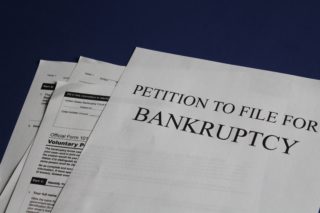 We have previously written about the effects of COVID-19 on the way we currently work, as well as how businesses need to adapt to protect their trade secrets, customer goodwill, and other interests. In ordinary times, emergency injunctive relief is often the first resort for a business after discovering its trade secrets were stolen or customer relationships are at risk. In the current environment, seeking emergency injunctive relief may not be possible or practicable until courts return to business as usual. Another ancillary effect of COVID-19 is the expected wave of bankruptcy filings. This poses the question: What do you do when a wrongdoer is insolvent or about to file for bankruptcy protection?
Continue Reading Bankruptcy is Not a “Get Out of Jail Free” Card: Enforcing Trade Secret Rights and Restrictive Covenants Against Financially Troubled Wrongdoers
Robert Milligan to Present “Coronavirus & Remote Work Force: Best Practices for Protecting Trade Secrets and Confidential Information” Webinar for the California Lawyers Association
 On April 21, 2020, at 12 p.m. Pacific, Seyfarth partner Robert Milligan is presenting the Coronavirus & Remote Work Force: Best Practices for Protecting Trade Secrets and Confidential Information webinar for the California Lawyers Association. The webinar will focus on the best practices and steps companies can take to continue to protect intellectual capital during the coronavirus pandemic, including the
Continue Reading Robert Milligan to Present “Coronavirus & Remote Work Force: Best Practices for Protecting Trade Secrets and Confidential Information” Webinar for the California Lawyers Association
Protecting Trade Secrets Without Breaking the Bank (Or Even Negatively Affecting Profits)
 As a result of the COVID-19 crisis, and the effective shut down of most of the US economy over the past several weeks (and for the foreseeable future), many companies are currently hemorrhaging cash, others may be temporarily illiquid, and even more are facing pressure from stakeholders to minimize costs (and maximize profits) in order to navigate and weather the current and impending financial storm. But this is no time to be penny wise and pound foolish, particularly when a company’s trade secrets are at risk and the misappropriation of those trade secrets could destroy the company.
Continue Reading Protecting Trade Secrets Without Breaking the Bank (Or Even Negatively Affecting Profits)
Prior Ruling on What Constitutes a Litigation “Emergency” May Not Be a Unicorn After All
 As we previously reported, as a result of the COVID-19 crisis, courts across the country are adjourning most appearances, including trials, and hearing only “emergency matters,” often by teleconference or other remote methods. This presents a new quandary for trade secret and restrictive covenant lawyers, who regularly must seek emergency injunctive relief to protect their clients’ trade secrets and customer goodwill. But it does not follow that these lawyers should be careless about when to seek emergency relief; in fact, quite the opposite, they must be more diligent in that regard during the current pandemic.
Continue Reading Prior Ruling on What Constitutes a Litigation “Emergency” May Not Be a Unicorn After All
Preparing for Trade Secret and Restrictive Covenant Litigation While the Court Near You is Closed
 Imagine this scenario: You are the general counsel of a company in a particularly competitive industry. A key company employee who has access to some of the company’s most sensitive information has been working remotely for the last three weeks as a result of the COVID-19 crisis, and the employee exploits the opportunity to print or download confidential company information to a personal device, including customer lists and product specifications. The employee then gives notice and immediately begins employment with a direct competitor and begins soliciting your top customers. You consult with outside counsel who drafts a complaint and motion for preliminary injunctive relief and expedited discovery. But, as a result of COVID-19, you cannot obtain emergency relief, or the ability to do so is severely limited. What do you do?
Continue Reading Preparing for Trade Secret and Restrictive Covenant Litigation While the Court Near You is Closed
A Herculean Task: Proving a Competitor’s Knowledge and Participation in an Unfair Competition Case
Seyfarth Synopsis: A recent case out of the Court of Appeals in Houston, Texas highlights the challenges in proving liability against a third-party competitor for knowing participation in breach of duty of loyalty/fiduciary duty, tortious interference with contract, and conspiracy when the third-party competitor participates in the solicitation of current employees. The Court’s opinion emphasizes that although an employee owes a duty of loyalty to her current employer, current employees can generally plan to compete—and communicate among themselves to do so—while still employed. The decision further illustrates the difficulty in proving a third-party competitor participated in any unlawful plans to compete, without some evidence showing the competitor had knowledge of the departing employees’ restrictive covenants and directing the wrongful acts. As such, the opinion demonstrates the importance of enforceable non-compete, non-solicit, and confidentiality agreements with key employees.
 One of the worst case scenarios for a company is an entire team—including high level executives—jumping ship to a competitor, and directly competing against the former employer in the same space and market. A recent decision from the First Circuit Court of Appeals in Houston, Texas provides an interesting look into just such a situation, and it reinforces that it is difficult for a company to recoup its damages after a max exodus of employees if it hasn’t taken the necessary precautions ahead of time.
Continue Reading A Herculean Task: Proving a Competitor’s Knowledge and Participation in an Unfair Competition Case
Protecting Trade Secrets During a Pandemic: Think Twice Before Loosening Security Measures in the Name of Convenience and Efficiency
 When the COVID-19 crisis hit the United States (indeed, before it was even considered a “crisis” here), we provided tips for protecting a company’s trade secrets in the event employees were permitted to work from home. In the ensuing three weeks, not only have employees been permitted to work from home, but many companies have required it. Indeed, an ever-growing list of states, including California, Connecticut, Illinois, Maryland, Massachusetts, New Jersey, New York, Ohio, and Pennsylvania have issued stay-at-home orders and shut down all non-essential businesses for the time being. As a result, there are now millions of employees working remotely who are accustomed to working in an office setting. Indeed, according to a March 12, 2020, flash survey of more than 550 employers conducted by Seyfarth, nearly 85% of responding companies were actively encouraging employees to work from home in some or all parts of the country, and more than 65% were taking steps to provide capability for employees to be able to work from home who do not normally do so. Those numbers are likely even higher now.
Continue Reading Protecting Trade Secrets During a Pandemic: Think Twice Before Loosening Security Measures in the Name of Convenience and Efficiency
What Constitutes a Litigation “Emergency” During a Worldwide Health Crisis?
In the world of trade secret and restrictive covenant litigation, time is often of the essence. Clients need to take immediate steps to prevent the harm that flows from the misappropriation of confidential information. Lawyers need to move with alacrity, and case commencements are typically accompanied by “emergency” motions for injunctive relief and expedited discovery.
Now, as a result of
Continue Reading What Constitutes a Litigation “Emergency” During a Worldwide Health Crisis?
Upcoming Webinar! Coronavirus & Remote Work Force: Best Practices for Protecting Trade Secrets and Intellectual Capital
 On Friday, March 27 at 12 p.m. Central, Seyfarth attorneys Michael Wexler, Jesse Coleman, and Justin Beyer will present Coronavirus & Remote Work Force: Best Practices for Protecting Trade Secrets and Intellectual Capital, the next webinar is Seyfarth’s Responding to the COVID-19 Pandemic Webinar Series.
Enacting a remote work policy or expanding an existing policy to include remote work
Continue Reading Upcoming Webinar! Coronavirus & Remote Work Force: Best Practices for Protecting Trade Secrets and Intellectual Capital